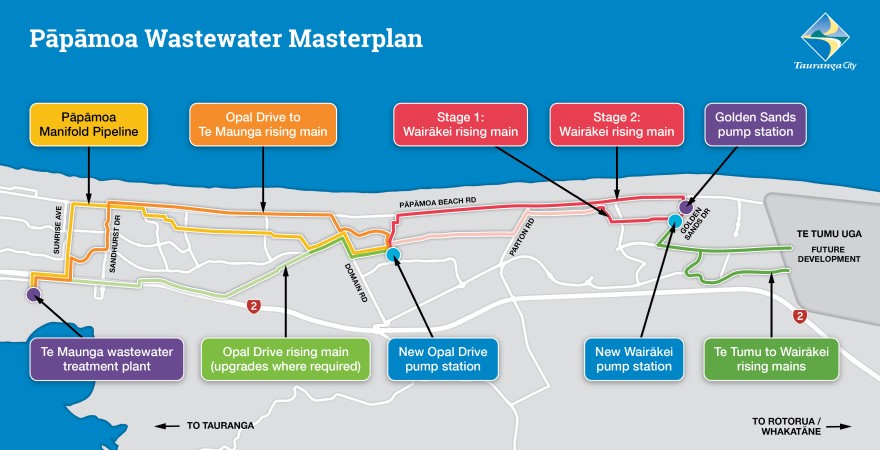
The new Wairākei Pump Station is a key project in the Pāpāmoa East wastewater network.
It will pump most of the wastewater flows from the Wairākei and future Te Tumu catchments through to the Te Maunga wastewater treatment plant.
The existing Golden Sands Pump Station in the Eastern Corridor is undersized due to current and planned growth in the area it serves. As a result, it is currently at risk of overflows. We are investing in this vital pump station to make sure we have a resilient wastewater service for the Pāpāmoa East community now and into the future.
What’s included in the Wairākei pump station project?
The works include:
- Archaeological investigations prior to main construction works commencing
- Earthworks to prepare the site for the pump station and storage tanks
- Pipeline realignments/construction in the road and stormwater reserve
- Construction of pump station
- The construction of generator and control buildings
- Construction of a biofilter for odour control
Construction is expected to begin in in September 2026. Once construction begins, it will take approximately two and a half years to complete.
Where is it going?
We are building the new pump station on a section of Wairākei reserve at 44 Golden Sands Drive. This is our preferred option as the land has been earmarked for public projects, such as this one.
It is also in a key area for our wastewater network. If we were to choose another site, the number of inlet and outlet pipes needed to maintain the network and ensure it flows to the Te Maunga wastewater treatment plant would be expensive.
Our priority is building infrastructure that is efficient and fit for the future, as well as providing value-for-money for our ratepayers and residents.
What is wastewater?
Wastewater is the water we use in our homes and workplaces. Each time you flush the toilet, pull the plug from a sink, or have a shower, that water drains into a wastewater pipe on your property. The pipeline on your property connects to the wastewater network, which carries the water safely to a treatment plant where the water is treated (cleaned) and then released.