The existing wastewater pipeline along the Churchill Road foreshore is located within the coastal environment is aging and is at higher risk of failure. This programme will progressively redirect wastewater flows inland, reducing reliance on vulnerable foreshore assets and helping protect the harbour and surrounding environment. The existing pipeline will then be lined for added resilience.
The Churchill Foreshore Wastewater Diversion Programme is part of Tauranga City Council’s wider wastewater renewals, resilience, and growth-enabling works.
Why are we doing this project?
The current foreshore wastewater network faces a number of challenges:
- Aging infrastructure located within a coastal and tidal environment.
- Capacity constraints that do not meet future growth needs.
- Some assets not meeting current Infrastructure Development Code (IDC) requirements.
This programme will:
- Enable future intensification and growth in Tauranga.
- Reduce capacity constraints and the risk of wastewater overflows.
- Improve resilience to natural hazards and climate impacts.
- Future-proof the foreshore pipelines network by diverting flows inland.
Programme staging and key projects:
The works will be delivered in stages between late February 2026 and end of 2027, with each project enabling the next part of the diversion:
- Judea Bypass (complete) – enabling works at Judea Pump Station to redirect flows into the pump station.
- Third Avenue Network Extension (starting from late February/March 2026) – upgrade of the existing pipe capacity to support inland diversion, decrease a critical network constraint and facilitate future growth. Construction has now commenced and will continue through to June 2026.
- Jonathon Street Rising Main (from May/June 2026) – construction of a new rising main and pump upgrades to complete diversion links into the wider network. Construction will commence in June 2026, with service locations and enabling works scheduled for mid-May.
- Churchill Foreshore Relining (TBC – however late 2028) – relining of the Churchill Foreshore pipeline to improve network resilience.
Delivering the works in stages allows impacts to be managed and wastewater services to remain fully operational at all times.
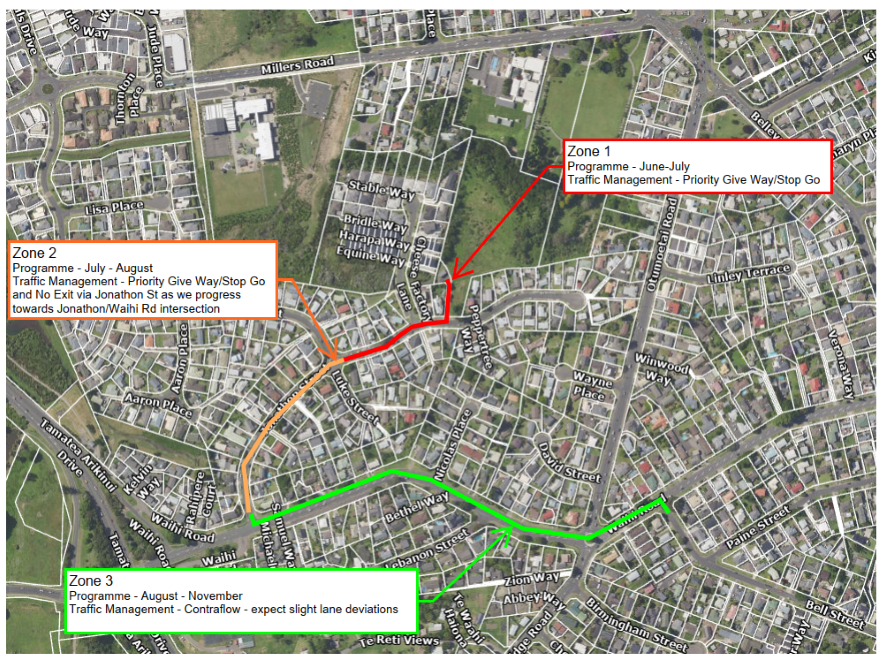
Figure one: Map showing stages of works.
Where will the works take place?
Works will occur across the Churchill Foreshore catchment and surrounding inland areas, including sections of road reserve, walkways, and green spaces. The walking track and accessways at Third Avenue will be temporarily redirected along the State Highway during construction.
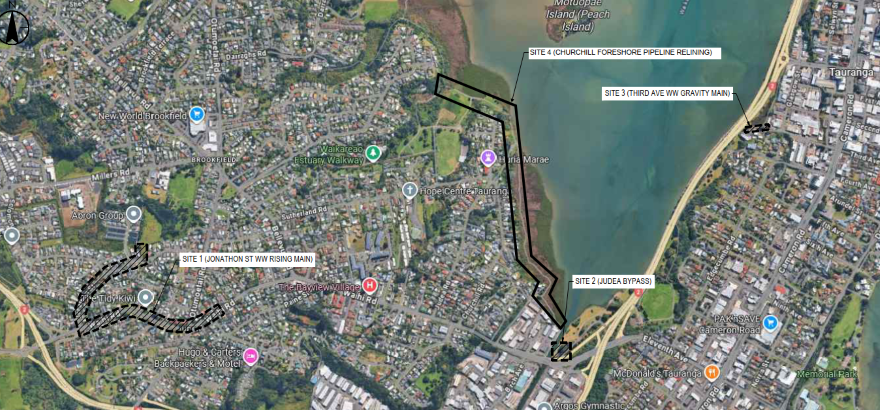
Figure two: Extent of programme.
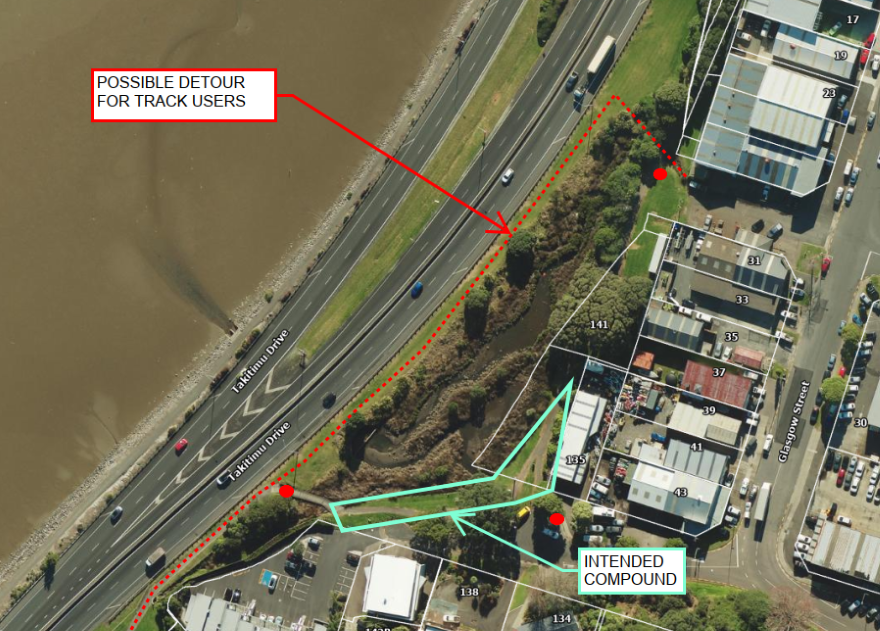
Figure three: Third Ave possible walking track diversion.
What is a wastewater diversion?
A wastewater diversion involves rerouting flows from one part of the network to another. In this programme, diversions are used to:
- Move wastewater away from environmentally sensitive coastal areas.
- Reduce overflow and failure risk.
- Improve long-term resilience and capacity.
What is a rising main?
A wastewater rising main is a pressurised wastewater pipe that moves water uphill or over long flat distances using pumps. Most pipes rely on gravity to flow downhill, however, where gravity alone is not enough, pump stations are used to push wastewater through a rising main to a higher route in the network.
What does relining entail?
Relining is a method of renewing an existing pipe from the inside without the need to dig up and replace it. This involves:
- Inserting a flexible liner into the existing pipe.
- Expanding the liner so it fits tightly against the inside of the pipe.
- Curing the liner so it hardens.
- Creating a new, strong pipe inside the old one.
What to expect during construction:
- Wastewater services will remain operational at all times.
- Temporary traffic management will be required along the Jonathon Street rising main works.
- Some walkways may be temporarily closed/diverted, with advance notice provided.
- Council will keep residents, businesses, and walkway users informed throughout construction.